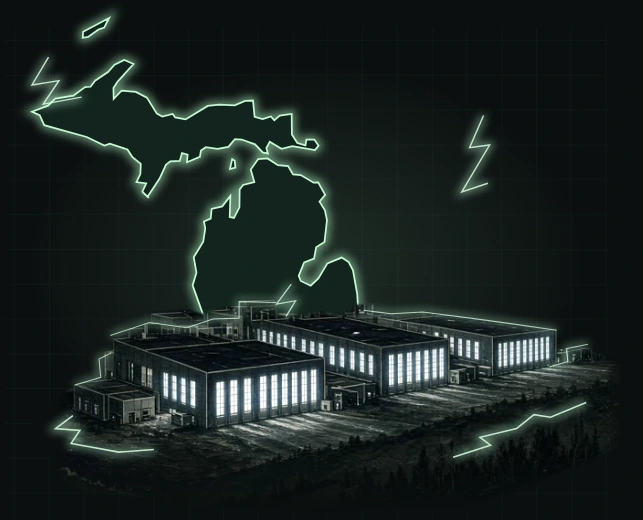
University of Michigan regents approved the construction and funding of a $1.25 billion supercomputing research center in Ypstilanti Township on Thursday, expanding the school's scientific capabilities. The 7-1 vote in favor of the Research Computing Center comes with $5 million in commitments to community partnerships in Ypsilanti while creating a partnership with the Los Alamos National Laboratory, which will serve as a tenant in the facility. Work at the facility will range from cancer research and drug discovery to projects on climate science, engineering, and other energy-related tasks. The project's approval comes amid broad disapproval of large data center construction and community pushback from residents in Washtenaw County. The project's green light follows the construction of a hyperscale data center built down the road in Saline. U-M Supercomputing Center. Regents pitched the project as a game-changing development in the world of artificial intelligence and advancing scientific research in various fields. University of Michigan Neurosurgeon Todd Hollon called the center "not the finish line" but "only the beginning" in work to cure cancers that have no treatment currently. "Our computational resources at present do not meet our scientific ambition as an institution. Currently, our research and our laboratory are limited to brain tumors, and it’s limited not because of a lack of ideas or data or talent," Hollon said. "It’s limited because of our lack of computational infrastructure here at Michigan. With greater capacity, we can extend these breakthroughs to all cancers and accelerate discoveries that transform patient care." The center will be built on Textile Road at a 124-acre site in Ypsilanti Township. The building will be approximately 150,000 square feet. It will be powered by a university-funded substation that will be built specifically for the center. According to the university, its construction will not increase utility rates for local residents. It will make use of municipal water and not draw on the Huron River or groundwater.
U of M regents approve $1.25B supercomputing center.
UpNorthLive states: With new leadership in Lansing comes new priorities, but there's at least one issue that isn't going away when lawmakers return in January. Data centers were much discussed on the campaign trail with concerns about facilities impact on the environment and utility bills.
Coverage of Benson plan for upcoming tenure concerning data centers
A proposed data center development in Windsor Township is raising concerns among some residents while local officials say the project remains in the early stages of review.
Citizens of Windsor Township voice concerns over proposed data center development.
WNDU 16 News Now states: Residents in Benton Charter Township are voicing concerns about a data center in their community. Township leaders say there aren't plans for one.
Citizens are voicing concerns over data centers in Benton Charter Township even though Township boards state they know nothing of any data center plans.
A Harvard study finds the largest U.S. data centers emit more carbon dioxide than Denmark, while climate talks in Turkey launch a voluntary clean AI pledge.
According to Harvard, big data centers emit more heat trapping gas than Denmark
Outside of the U.S. Capitol building, standing behind stacks of bankers boxes, a number of progressive representatives gathered with labor advocates, political organizers and environmentalists to demand a pause on data center development until regulations can be put in place. During a Tuesday press conference, Jim Walsh, the policy director for Food & Water Watch […]
William Lawrence of Lansing, who defeated U.S. Rep. Tom Barrett is amoung progressives calling for a federal data center moratorium.
by Sybil Kolon All board members were present at the November 10 board meeting. Also present were fire chief Mike Kouba, zoning administrator Carl Macomber and several members of the public. Kouba provided the monthly report for October. There were 57 calls for service, including four fires, 38 EMS responses and three Hazmat incidents. Regular […]
Related Digital presented check to Manchester Township board as part of agreement to fund fire departments
Saginaw Township and Romulus are among the newest Michigan communities to establish restrictions on data centers, Glenn Hedin reports for Michigan Public. While the Saginaw Township Board of Trustees set standards for the development of any prospective data center, Romulus has approved a 180-day moratorium on data center development. Summit Township and Napoleon Township in […]
Beyond political parties and individual candidates, there was a clear loser in the 2026 midterms: data centers. As these essential pieces of AI infrastructure have dropped in popularity, they’ve been met with staunch resistance at the ballot box. Data centers lost on the ballot in the midterms. According to research by https://datacentersontheballot.com/ Rosebud Consulting, voters in cities across the nation approved 44 ballot measures restricting data centers this November.
A look at the mid term elections and data centers.
The University of Michigan is working with an archeologist to assess whether Indigenous artifacts or human remains could be found at its proposed Ypsilanti Township data center site. State officials warn that land near the Huron River is highly archaeologically sensitive.
The University of Michigan is working with an archeologist to determine is the site of proposed data center could contain Indigenous aritfacts or human remains.
MS NOW states: “We’ve got to put a pause … to make sure this doesn’t go terribly wrong.” William Lawrence, a progressive Democrat and co-founder of the climate group Sunrise Movement, FLIPPED a U.S. House seat in Michigan in the midterm elections. Now he’s setting his sights on another target: A.I. and data centers.
William Lawrence, a Progressive Democrat and co-founder of the climate group Sunrise movement calls for a federal moratorium to new data centers
After a data center non-disclosure agreement controversy rocked Howell Township, its board of trustees are now poised to pass a ban on township officials and employees from signing NDAs via local ordinance.
After some Howell Township officials signed a NDA with a delveloper for a proposed Meta data center, its board of trustees look to ban township officials signing NDAs.
As tech companies and President Donald Trump’s administration continue pushing to build out more data centers to drive artificial intelligence development, some proposals are looking to move these facilities underwater. Scientific American reported Oct. 27 that the Trump Administration is considering proposals for underwater data centers in Cook Inlet, Alaska, and the Gulf of Maine. […]
Changes in Federal law could weaken environmental protections of the Great Lakes when it comes to underwater data centers.
MITechNews.Com states: AI Data Centers and Sustainability: Environmental concerns, community involvement and the importance of responsible infrastructure development.
host Mike Brennan talks with Mark Richards, a political science professor at Grand Valley State University, and Kareem Scales, CEO and founder of Scales Consulting, about AI and data centers
The City of Romulus is getting ahead of the data center debate before it even begins, as they are temporarily banned before they even open. Data Centers and Flock, oh my! Data Centers and Flock cameras were the hot topic of discussion at Romulus City Hall on Monday. Residents joined the meeting expressing a number of environmental concerns and that they do not need one in their neighborhood. Meanwhile, the city council stressed that nothing has been proposed. A six-month moratorium would prevent them from even looking at proposals or applications, so the city council voted unanimously for the moratorium. Besides Data Centers, Flock cameras became another topic of discussion. The city has twenty up and running with thirty more scheduled to go up. Residents at the meeting questioned how they are being funded. Residents asked: Is it paid for by the city's Tax Increment Finance Authority, also known as ‘TIFA Board?’ Or was it the police department? Some say the original contract with Flock was for $47,500 but allege a short time later it was $90,000. When FOX 2 asked Mayor Robert McCraight about this discrepancy in October, he said it was a "typo by a clerical person." "It’s just a way to clean it up. We want to make sure everybody’s on board and on the same page," he said. "The TIFA Board knew what they were voting on to support and help alleviate some of that drain or general fun which is public safety dollars. But Romulus is a different community. We housed DTW. We talked about it before with 30-million travelers. That’s more than Disneyland and the Magic Kingdom. "So when you talk about 60–70 percent of the violent crime in Romulus is committed by people who don’t live here, we need to use tools to push that number down and our accredited police department is doing such. But we’re always going to look at one's venues. Is that the best technology that we have right now? It seems like. Can we get better? Absolutely."
Romulus City Council votes to temporarily ban data centers
England-based Servers.com by Nexcess has launched a data center and capacity pod in Lansing, one of six new facilities across the United States and Europe. The Lansing operation formally announced […] The post New Servers.com by Nexcess Data Center Begins Operations in Lansing appeared first on DBusiness Magazine .
Servers.com launches data center in Lansing. “We’ve grown our data center footprint by 23 percent this year, and we’re constantly adding capacity to ensure our customers have room to grow, whether th
MLive reports a conceptual plan accompanying a Lenox Township rezoning request depicts 10 buildings totaling 2 million square feet. The application does not identify the use as a data center, although the applicant previously described a data center campus. A rezoning hearing is scheduled for November 16.
Reported conceptual plan and pending rezoning hearing; indexed-text evidence, not project approval.
MLive reports Napoleon Township’s board unanimously approved a temporary moratorium on considering data center applications on November 10, giving officials time to study local ordinances and potential regulations. The moratorium’s full terms were not independently reviewed; this is not evidence of a permanent ban.
Reported temporary application moratorium; limited indexed-text evidence, full terms not reviewed.
MLive reports Summit Township unanimously approved a zoning amendment on November 10 addressing potential data centers’ noise, water use, siting, community outreach and eventual decommissioning. The action follows a temporary moratorium and is adoption of operating and application standards, not approval of a specific data center.
Click On Detroit | Local 4 | WDIV states: Romulus City Council voted unanimously to impose a 180-day moratorium on data center proposals while the city studies potential zoning regulations. The moratorium takes effect immediately. It was initially proposed for data centers with an electrical demand of at least one gigawatt, but council members amended it to apply to all data centers. Welcome to the official YouTube channel of WDIV Local 4 News in Detroit!
Romulus City Council passes 180 day moratorium on data centers
Bridge Michigan states: Michigan lawmakers are under intense pressure to regulate data centers more strictly as public opposition to the computing facilities becomes too strong to ignore.
Talks about data centers and what is the local economic impact
WDIV reports governor-elect Jocelyn Benson proposes pausing new data center construction until Michigan establishes safeguards for community participation, water and land protection, and electricity costs. Her plan also calls for ending data center tax breaks, union contracts and greater project transparency. These are proposed policies, not an enacted statewide moratorium, repeal of existing tax incentives or new regulations already in force.
Governor-elect policy proposals; no enacted statewide moratorium or tax-break repeal reported.
MLive’s Lucas Smolcic Larson reports that Lenox Township is fielding a request to rezone 1,400 acres in the Macomb County Community. While the request does not specify what type of development the land would be used for, the application comes from Lenox & Chesterfield Development Alliance, LLC. In previous letters to the township supervisor, attorneys […]
General Motors’ historic 2009 bankruptcy was so massive that it’s taken 15 years for a real estate trust to clean up and sell the hundreds of buildings and thousands of acres of land across 14 states that GM left behind. And the work isn’t done yet. Bruce Rasher is Racer Trust’s redevelopment manager. Rasher, who […]
Old GM factories being eyed as a potential site of future data centers.
Michigan Public reports the University of Michigan is working with an archaeologist to evaluate the possibility of Indigenous artifacts or human remains at its proposed Ypsilanti Township data center site. State historic-preservation staff warned of archaeological sensitivity but had not specifically assessed the property. The report does not establish that remains have been discovered or that an archaeological assessment has been completed.
Reported archaeological assessment and consultation; no confirmed discovery of remains.
MLive reports Saginaw Township trustees unanimously approved a data center ordinance on November 9 after months of work, despite having no proposed data center development in the township. This is reported adoption of local zoning rules, not approval of a particular facility.
Reported ordinance adoption; indexed-text evidence, adopted ordinance not independently reviewed.
Michael Perna states: What happens next depends on who you ask. A University of Michigan business professor told Crain’s that if Anthropic comes up short, it would cut its most contested sites first, Lyon included.
Anthropic has not yet committed to the data center, so Lyon Township property may revert back to light industrial.
WDIV reports Romulus City Council unanimously adopted an immediately effective 180-day pause on data center proposals while officials study zoning and environmental impacts. Council broadened the measure from facilities needing at least one gigawatt to data centers of all sizes. Mayor Robert McCraight said the city had no existing data centers or submitted proposals. This is a temporary moratorium, not an enacted permanent ban.
Reported adoption of a temporary 180-day moratorium covering data centers of all sizes.
The Detroit Free Press reports that energy-affordability advocates and lawmakers see opportunities for data center guardrails and utility-accountability measures after the election. Incoming Senate leader Darrin Camilleri supports a data center moratorium, but the article says his caucus has not adopted a position. Proposed restrictions on consecutive utility rate cases and other legislative ideas are not reported as enacted law.
Post-election policy priorities and proposals; not enacted statewide data center restrictions.
MLive reports that 13 of Jackson County’s 19 townships adopted data center moratoriums over the preceding year while considering zoning rules. This is a cumulative account of local pauses, not 13 new votes, permanent bans or proof that every moratorium remains active. This note relies on indexed article text because the original page was inaccessible; the underlying township ordinances were not independently reviewed.
Reported cumulative township moratoriums; indexed-text evidence, not independently reviewed ordinances.
TALK MIDLAND w/ Logan Richetti states: Could Midland, Michigan support more data center development? Logan and Ironstack Technology discuss infrastructure, power, and the region's industrial strengths.
The Cost Of AI states: Michigan's regulators approved, with conditions, DTE Electric's contract for a ~1.4 GW data center for Oracle and OpenAI in Saline Township (Dec 18, 2025, case U-21990). The data center pays for at least 80% of the power it signed up for, used or not, for at least 19 years. If it shuts down early, it owes up to 10 years of those payments, which DTE's filing puts at about $2.26 billion. Anything left over, DTE covers, not its other customers. That's an exit fee.
Democrats are looking to push tougher regulations on data centers just two days after regaining control of Congress and state lawmakers are following suit. Meantime, the AI industry is trying to regain its footing after a sharp reaction on Wall Street following Tuesday's midterm results. AI future in question after blue wave. The lawmakers FOX 2 spoke with say they are still wrapping their heads around what the new legislation could look like. But some AI companies are already making their own policy changes in response to Washington’s new direction. OpenAI released a new series of data center commitments—vowing to pay full electricity and infrastructure costs at its facilities, alongside new environmental protection plans. It comes as Democrats in the incoming congressional majority push for a one-year moratorium on new data center construction, citing grid strain, public safety, and job loss concerns. Lawmakers are also demanding mandatory safety frameworks and calling on Big Tech CEOs to testify. FOX 2 asked industry experts what these potential new regulations could look like. "My expectation is that they will put up some legislation similar to what we’ve seen from states like Illinois and California to maybe prevent larger companies from taking advantage of the leeway that they’ve had in AI for the past few years," said AI expert Joe Tavares. "Well, we’re always going to try to protect the people, right? So we are looking at how do we protect energy, how do we protect water, how do we protect communities, noise regulations," said Awecomm CEO Brent Yax. "I assume we are going to see more of that. I hope we don’t see a moratorium because I think that slows us down quite a bit, but I do hope we see those regulations and see other states regulate this while building, and not slow down economic development. "This push is playing out at the grassroots level, too—voters approved dozens of local ballot measures nationwide this week to delay or ban new data centers over noise and rising utility rates.
As Democrats sweep midterm elections tougher regulation is expected on data centers.
DTE Energy will sell its non-utility Vantage business, expected to raise $3 billion, to help pay for a $44 billion investment plan for grid reliability, renewables, and data center demand. Critics, including Michigan Attorney General Dana Nessel, continue to raise concerns about ratepayer impacts.
DTE set to sell its non-utility business to fund the growth of grid needs for data centers
MLive reports Lenox Township received a request to rezone about 1,400 acres to light industrial use, with a public hearing scheduled for November 16. The reporting says the request does not specify a data center use, although the applicant previously described plans for a data center campus. This note is based on indexed article excerpts; the original page was inaccessible. A rezoning request is not an approved data center.
Reported rezoning request and upcoming hearing; original page inaccessible, indexed-text evidence only.
WDET 101.9 FM Detroit states: Data centers were on the mind of many voters during the 2026 midterm elections. In Michigan, Democratic challenger Will Lawrence campaigned on a data center moratoriam and defeated incumbent Tom Barrett, flipping the 7th Congressional District seat.
A look at data centers role in the midterm election results.
Utility Dive reports DTE agreed to sell its unregulated Vantage business for $3 billion and outlined a $44.2 billion investment plan for 2027–2031. The sale is expected to close in the first half of 2027. DTE executives say data center growth could spread fixed costs and delay another electric rate request; those are company expectations, not guaranteed bill reductions or approval of all planned spending.
Announced sale and investment plan; affordability benefits are company projections.
Democrats won control of the governor's office and both chambers of the Michigan Legislature, and voters passed a ban on political spending by utilities. Environmental advocates say the results could protect the state's clean energy law and increase pressure on utilities and data centers.
Recap of election results and possible outcome on energy and data centers
Three Lowell Township officials will face recall next year amid controversy over a proposed data center.
Township Supervisor Jerry Hale, Trustee Mark Anderson and Trustee William Thompson face recall after controversy of proposed data center in Lowell Township.
WOOD TV8’s published video description reports that three Lowell Township officials will face a recall vote in 2027 amid controversy over a proposed data center.
Township Supervisor Jerry Hale, Trustee Mark Anderson and Trustee William Thompson face recall after controversy of proposed data center in Lowell Township.
Exit9media states: Michigan has 74 operating data centers and 16 more proposed — and in most cases, nobody has to publicly report how much water any of them uses.
Proposed bill to regulate and control how much water data centers can use.
Clinton Township has joined the ranks of Michigan communities with a temporary moratorium on data centers. Anne Snabes of The Detroit News reports that the township’s Board of Trustees voted 6-0 to approve a 180-day pause on accepting and processing permitting applications and site plans for data centers within Clinton Township. The Lansing Economic Area […]
Exit9media states: Pittsfield Township, Michigan votes 7-0 for data center rules before any developer applies — 500 feet from homes, 90% on-site renewable power. Nine Wire connects the headline to your everyday life. #ainews #artificialintelligence #ainewstoday #michigan #datacenter #localgovernment #energy #water
Review of Pittsfield Township rules on data center
WNEM TV5 states: Data centers are a flashpoint in the race for Michigan’s next governor. They could affect electric bills and water and take up acres of property. For more Local News from WNEM: https://www.wnem.com/ For more YouTube Content: https://www.youtube.com/channel/UCmi4tHXXktvPxxcvfi2vpLQ
Electricity/Utilities become a hot topic this year.
Just days after developers announced they’re exploring a potential data center south of Lansing, local officials urged them to “cease all efforts.” The swift rebuke adds to growing resistance to data center projects across the state.
Local officials reportedly urge developer to cease all efforts before talks begin.
Michigan Attorney General Dana Nessel’s office says she filed a petition for rehearing in MPSC case U-22058, challenging approval of DTE’s contracts to serve Google’s Van Buren Township data center. The office argues that evaluating costs and benefits across the full 20-year term leaves other customers exposed to cost shifting, and seeks annual reconciliation and stronger financial protections. These are the Attorney General’s arguments in an official office press release, not new commission findings or a decision granting rehearing.
Official AG press release announcing rehearing petition; requested relief not decided in source
The Delhi Township Board Supervisor says his role on the economic development agency working to bring a data center to the area is only "ceremonial."
"I had a ceremonial seat on the Lansing Economic Area Partnership (LEAP) board of directors because Delhi Township, the same as many Lansing area municipalities, was a dues-paying member of LEAP.”
Michigan Public reports that Attorney General Dana Nessel petitioned for rehearing of the MPSC’s approval of a 20-year DTE electricity-service contract for Google’s Van Buren Township data center. Nessel argues that contract-wide cost accounting can allow subsidies in individual years and seeks annual reconciliation. The report also cites the commission’s position that the agreement protects other DTE customers from costs; the MPSC declined comment on the petition and Google did not respond. The report does not establish that rehearing was granted or the approval reversed.
Bridge Michigan states: Michigan lawmakers are under intense pressure to regulate data centers more strictly as public opposition to the computing facilities becomes too strong to ignore.
WILX reports that Delhi Township trustees unanimously adopted a resolution opposing data centers at an October 30 special meeting. The resolution asks LEAP and Lighthouse Sustainability to stop pursuing their proposed development, citing a developer statement about community support. WILX reports that Lighthouse CEO Gary Dorris would not commit to halting the project. The reported resolution is distinct from the township’s existing moratorium and does not itself establish a permanent zoning ban or a completed developer withdrawal.
Reported unanimous opposition resolution; developer withdrawal not confirmed
WEMU reports that Pittsfield Township trustees approved an ordinance regulating data centers and other high-resource-demand facilities on October 28. The report describes siting rules, neighborhood meetings, environmental and noise requirements, and studies ahead of approval. Supervisor Trish Reilly said there were no current or known future plans for such facilities in the township. Reported passage does not by itself establish the ordinance’s publication or effective date.
Reported ordinance adoption; effective date not verified
Delhi Township is severing its membership with a local economic development agency after the group announced efforts to bring a data center to the area.
Delhi Township severs ties with the Lansing Economic Area Partnership (LEAP) after it details its intention to bring a data center to the area.
Utility Dive reports that CMS Energy CEO Garrick Rochow told investors he expected more local permitting progress after the midterm elections for a large data center associated with Consumers Energy. His assessment attributed opposition partly to election politics. The comments are a company forecast, not evidence of new zoning approval or a guaranteed construction timetable.
WKAR reports that Delhi Township ended its Lansing Economic Area Partnership membership after LEAP and Lighthouse Sustainability announced exploration of a data center off College Road. Trustees scheduled a special meeting to consider a resolution opposing data centers. The township already has a 12-month moratorium on accepting proposals; the reported opposition resolution was still pending, not an adopted permanent ban.
Reported membership withdrawal; opposition resolution pending
Pittsfield Township’s second-reading draft of ZOA 26-236 proposes a regulatory framework for data centers and other high-resource-demand facilities, addressing siting, infrastructure capacity, resource use, nuisance impacts and decommissioning. The supplied township PDF leaves adoption, final publication and effective-date fields blank. It documents the proposed text rather than independently proving the final adopted wording or when it takes effect.
Official second-reading draft; adoption and effective-date fields blank
UpNorthLive states: As Election Day nears, candidates Abdul El-Sayed (D - MI) and Mike Rogers (R - MI) are making their case to voters on why they are the best person to send to Washington, D.C. as Michigan's junior Senator.
UpNorthLive states: As Election Day nears, candidates Abdul El-Sayed (D - MI) and Mike Rogers (R - MI) are making their case to voters on why they are the best person to send to Washington, D.C. as Michigan's junior Senator.
A group is looking to build a data center on a 423-acre site in the Holt area.
Lighthouse Sustainability, in partnership with the Lansing Economic Area Partnership, on Tuesday announced it is looking at developing Holt Economic Opportunity Park
Lansing-area economic development officials vowed radical transparency Tuesday as they announced plans to (maybe, possibly) develop a data center on a 423-acre site near Holt.
Lansing-area economic development officials say they’re trying a new approach centered on transparency and community involvement.
During a panel discussion at the Bridge Michigan Issues Summit, experts discussed the tradeoffs between revenue from multi-billion dollar computing investments and impacts to air, water and land.
Experts talk of more regulations as data centers push for more land use in Michigan
During a packed city council meeting on Tuesday, Inkster officials declined to act on a special land use permit for a proposal to convert a 40,000 square foot warehouse into a data center. WDIV Local 4’s Noelle Friel reports that without a motion to approve the request, the project has effectively been halted. As development […]
Hoodline, citing Macomb Daily reporting, says Clinton Township trustees approved a 180-day pause on siting and building data centers despite having no pending proposal or developer discussions. The article describes the pause as time to study zoning, infrastructure, noise, utility and environmental effects before a project is proposed. It reports differing trustee views and the township attorney’s comments on legal limits. This is a reported temporary moratorium, not a permanent ban or rejection of a specific development; the underlying municipal resolution was not independently reviewed.
News report; reported 180-day moratorium, no pending project identified
Michigan Public states: Democratic Attorney General candidate Eli Savit says the attorney general should intervene at the state’s utilities commission to prevent data center-related rate increases while also providing legal support to communities being sued by corporations. Listen to the full conversation at michiganpublic.org/election
Democratic attorney general candidate Eli Savit discusses his view of the attorney general's power to intervene in data-center utility proceedings.
THE BLACKBOTTOM PODCAST states: Welcome to Dynamic Detroit, AI Podcast powered by The Blackbottom Group (BBG MEDIA). I’m your host, Ray Smith. Detroit built the industrial backbone of the 20th century. Today, a new race is taking shape—the race for artificial intelligence compute. Hyperscale AI data centers are scaling from 100 megawatts past full gigawatts.
Ray Smith and guests talk about their views of AI data centers
Tudor Dixon states: Are fears about artificial intelligence and massive data centers threatening Michigan's economic future? Tudor Dixon sits down with Mark Mills, Executive Director of the National Center for Energy Analytics and author of The Cloud Revolution, to challenge common concerns about AI data centers, including electricity costs, water consumption, environmental impact, and job creation.
Mark Mills speaks with Tudor Dixon on her podcast about data center fears
TLDR - HQ (Technology) states: Data center concerns reportedly influence nearly forty percent of congressional races, including Senate contests in Ohio, Michigan, and Texas, even as the administration argues rapid construction is critical to competing with China and tech billionaires spend millions to influence elections.
News24 states: News24 Washington Correspondent Jonathan Kearsley visited Michigan, where a data centre roughly the size of 10 MCGs is being developed, a project that is becoming a key issue for Michigan voters in the upcoming midterm battle.
A look at the Saline data center from the Australia
Michigan Public states: Republican Attorney General candidate Doug Lloyd says the attorney general should improve transparency of the contracts for proposed projects to allow local communities to make their own decisions based on expected electricity and water use.
Attorney general candidate Doug Lloyd discusses his views on data centers.
Unreviewed source candidate. The Invisible Operator states: A township voted down a data center. The developer sued. Here is how the Saline Township, Michigan fight ended.
Tru Control News Network states: Franks breaks down Michigan’s data center debate—the demand for electricity, DTE’s customer protection claims, community concerns, and regulators’ role in deciding who covers the costs.
On Wednesday, the Michigan Department of Environment, Great Lakes and Energy took questions and heard concerns from residents of Saline Township and communities across the state as it worked to finalize an environmental permit for an onsite wastewater facility proposed as part of the hyperscale data center under construction in the Washtenaw County community. Under […]
EGLE takes comments from public on proposed wastewater dissemination in the Saline River
Power Alliance states: In Michigan, communities are fighting data centres because the grid is already unreliable, while paying some of the highest electric rates in the country. 💸
Is the Electric grid breaking and is there a media blackout of this concern
The Sun Times News reports on the Saline Township data center’s proposed sanitary-wastewater permit, an October 21 policy summit, Dingell’s environmental inquiries about the U-M–Los Alamos proposal and DTE’s planned gas-generation expansion. The article distinguishes the historic Textile Road dumpsite from the proposed computing-center property and attributes residents’ concerns, agency responses and developer or utility assurances. It notes that DTE’s proposed $6.4 billion generation investment has not been approved for recovery from residential customers; cost allocation remains a regulatory question.
News report; wastewater permit and generation-cost allocation remain under review
The Guardian reports that DTE Energy is seeking regulatory approval for a long-term plan including two gas plants with a combined 2.1 gigawatts of capacity, amid rising electricity demand from data centers. The article puts the plants’ potential cost at $6.4 billion and describes consumer advocates’ concerns that residential customers could bear costs. DTE describes its plan as affordable and says it also expands renewable energy and battery storage. Who pays remains subject to later regulatory proceedings; the reported figure is not an approved charge to residential customers.
News report; energy plan under regulatory review, customer cost allocation unresolved
MLive’s search-indexed account describes residents raising concerns at an EGLE hearing about a proposed wastewater-discharge permit for the Saline Township data center. The report discusses monitoring and potential effects on the Saline River, alongside responses from EGLE and Related Digital. This note is based on indexed article text; the original page was inaccessible and its publication date could not be verified. The hearing is not evidence that a permit was granted.
Click On Detroit | Local 4 | WDIV states: Michigan gubernatorial candidates John James and Jocelyn Benson were asked in a debate about their stance on data centers.
Rep. Debbie Dingell’s office released EGLE’s response to her inquiry about the Textile Road site proposed for the University of Michigan–Los Alamos research computing center in Ypsilanti Township. The October 20 press release includes a follow-up letter asking EPA about cleanup responsibilities, groundwater monitoring, recorded land-use restrictions and the final work plan. Her office said EPA had not yet responded to her earlier inquiry. These are requests for information, not findings that the proposed project has received environmental clearance or violated environmental rules.
Official press release; EPA information requested, environmental questions unresolved
Unreviewed source candidate. Lamont Tyson states: According to Metro Detroit News, developers wanted to turn a vacant warehouse into a 40,000-square-foot data center operating around the clock.
Michael Perna states: So what protections are in place? State regulators are requiring Google to pay for 80% of the power it contracted for whether it uses it or not. If it uses 50%, it still pays for 80%, because nobody in Southeast Michigan wants this raising their DTE bill. Panattoni has also agreed to vibration monitoring.
The 'Gander states: During a town hall hosted by CBS News’ Tony Dokoupil, Vice President JD Vance responded to a question from Lindy Valenzuela, a mother of two from Dowagiac, Michigan, who described the negative effects of noise from a data center in her community and asked what the administration would do to address the issue.
Vice President JD Vance responded to a question from Lindy Valenzuela, a mother of two from Dowagiac, Michigan
CBS Detroit states: A company that planned to house a data center in Inkster, Michigan, said it will instead change plans and choose another location for its facility.
Company drops Inkster as a potential site after no motion vote
Click On Detroit | Local 4 | WDIV states: The developer, Robert Kato of Klever Technology Center LLC, had applied for a special land use permit to convert a vacant 40,000-square-foot warehouse on Southern Street off Michigan Avenue into a data center. After hours of public comments from residents, no council member made a motion to approve the request.
Inkster denies special land use permit for data center
The 'Gander states: Credit: FOX 2 Detroit A packed Inkster City Council meeting turned tense as residents pressed the developer behind a proposed $75 million data center over his experience — and what the city would actually get in return.
Resident confronts data center builder at Inkster City Council meeting
East Lansing, Mich. (WLNS) — Michigan State University has partnered with the city of East Lansing to host Data Week, which will feature events on data science, data centers and artificial intelligence to help students understand these topics. The first event was a Lunch and Learn, held at Minskoff Pavilion on MSU's campus on Monday. The session tackled the history [...]
Michigan State University has partnered with the city of East Lansing to host Data Week, which will feature events on data science, data centers and artificial intelligence
A massive 40,000 square foot data center was being proposed in Inkster, leading to many residents opposing it. However, city officials have shot it down after an emotional meeting Monday night. Massive Inkster meeting Monday night. When FOX 2 first arrived at the meeting at 6 p.m., the parking lot was empty. However, it quickly filled as hundreds are now expected to attend the meeting who were up in arms and made their voices heard. The proposed building was located on Southern Street near Inkster Road and Michigan Avenue. Klever Technology said they hoped to transform the vacant 40,000 square foot building into a $75 million data center. No one on the city council made a motion, so the data center proposal is dead.
Tyrone Township officials have begun developing regulations to prohibit data centers that require more than 60 megawatts of electricity, The Livingston Post reported. Officials in the Livingston County township say their moratorium blocks data center applications until about the end of February or beginning of March. The Van Buren Township Planning Commission on Wednesday approved […]
Kerin Hayden - Realtor & AI Conservationist states: The University of Michigan and Los Alamos National Lab plan a $1.25 billion supercomputing data center on Textile Road in Ypsilanti Township — next to homes, a major gas pipeline and the Huron River.
WDIV reports that no Inkster council member moved to approve a special land use permit for a proposed data center in a vacant 40,000-square-foot warehouse on Southern Street, despite a planning commission recommendation for conditional approval. Residents raised environmental, noise and light-pollution concerns at the crowded meeting. Developer Robert Kato of Klever Technology Center LLC told the station he did not plan to appeal or pursue the project at that location. The report describes a lack of council action, not a recorded vote rejecting the permit.
News report; council took no approval action, developer says project will not proceed at this location
The Oakland Press republishes Bridge Michigan reporting by Eli Newman examining claims about data centers’ scale, local control, electricity rates, environmental effects and economic benefits. Experts distinguish existing electricity-cost trends from possible future impacts and describe how water use, emissions and noise depend on facility design and power supply. This October 18 republication is the same underlying Bridge reporting, not independent corroboration or a guarantee about any individual project.
Syndicated explanatory report; expert assessments, not project-specific findings
The Byte-Size Brief states: By building massive capacity for hyperscale data centers like the 1.4 gigawatt Oracle facility in Saline Township and a pending 1 gigawatt Google agreement, DTE aims to absorb fixed costs and lower residential rates over time.
Bommarito Consulting states: A proposed data center near Mason, Michigan, has become a question about the future of a community. Its landowners want roughly 406 acres moved from Vevay Township into the city, saying the development needs Mason's utilities. What would that change mean for residents, public services, and local costs?
A look at the proposed data center and the discussion to move 1 property into Mason from Vevay Township.
MLive’s indexed October 17 headline reports that fines involving construction trucks using dirt roads at the OpenAI and Oracle data-center project are approaching six figures. The full article was inaccessible during intake. The precise total, payment status and enforcement details still require review of the original article before publication.
Headline-only candidate; full article review required
Michael Perna states: It's called Project Cannoli, a nearly 1.5 million-square-foot hyperscale campus on 282 acres off Haggerty Road near I-94 and I-275, close to Detroit Metro Airport, with three data processing buildings plus an office and network buildings. It will use 1 gigawatt of power, roughly as much as 750,000 homes. It's only the second time Michigan has approved power contracts for a hyperscale data center, after the Oracle and OpenAI project in Saline Township.
Magnetic Norse states: Van Buren Charter Township, Michigan. Records from Michigan FOIA requests 26-166 (854 files) and 26-212, both released at no charge.
The Van Buren Township Planning Commission approved a site plan for Google’s proposed facility near the Detroit airport — the last major permitting hurdle to the 1-gigawatt facility’s construction.
Reported site-plan approval for Google's proposed facility near Detroit airport
Van Buren Township's planning commission approved Google's data center site plan in a 5-1 vote Wednesday, despite concerns from nearby residents about construction noise, dust, and health impacts. The facility is expected to begin operations in late 2027.
Van Buren Township's planning commission approved Google's data center site plan in a 5-1 vote Wednesday, despite concerns from nearby residents about construction noise, dust, and health impacts.
Click On Detroit | Local 4 | WDIV states: The Van Buren Township Planning Commission voted 5 to 1 on Wednesday to move forward with the site plans for a massive data center campus near I-94 and Haggerty Road.
The Van Buren Township Planning Commission reportedly voted 5 to 1 to advance site plans for a data-center campus near I-94 and Haggerty Road.
Unreviewed source candidate. Ypsilanti Township states: The University of Michigan & Los Alamos do not describe their facility as a "data center". They prefer to describe it as "high-performance research computing center". What is it, really? Visit ytown.link/datacenter to learn more and stay informed.
CBS Detroit states: A proposed Google data center in Wayne County, Michigan, took another step forward when the Van Buren Township Planning Commission voted on Wednesday to approve a final site plan for the campus, including a high-voltage switching station.
Van Buren Township Planning Commission voted on Wednesday to approve a final site plan for the campus, including a high-voltage switching station.
Bridge Michigan states: As data centers continue to stir controversy across Michigan, related attacks are emerging in the governor’s race between Democrat Jocelyn Benson and Republican John James.
Fact checking the claims of proponents and opponents of data centers in Michigan
Bridge Michigan states: Proposed data centers have sparked controversy in cities and towns across Michigan and emerged as a key issue for campaigns leading up to the November election. That’s true in the Michigan governor’s race, where both major party candidates have responded by proposing temporary moratoriums.
Fact checking the claims of proponents and opponents of data centers in Michigan
Grid Receipt states: Michigan regulators approved Google's data center contract on October 1: a 20-year term, minimum billing of 80% of the power it reserved, at least 15 years of payments even if it leaves early, and collateral in case it shuts down. The $1.7 billion customer benefit is DTE's own estimate. Full receipt: Are States Making Data Centers Pay? The 23-State Receipt — https://youtu.be/vYeNSKYIBDI Source: Michigan Public Service Commission, Oct 1, 2026. #datacenters #electricbill #Michigan
The Livingston Post reports that Tyrone Township is drafting rules that would prohibit data centers requiring more than 60 megawatts and require special-land-use approval for smaller facilities. The proposal includes noise, water-use and ongoing compliance standards, with fire-protection provisions still being developed. The planning commission took no action at its October 13 meeting, and no public hearing had been scheduled when the article was published. The proposed size limit is not an adopted ban.
News report; proposed 60-megawatt limit, ordinance not adopted
WXYZ reports that Van Buren Township officials approved plans for Google’s 282-acre data-center campus on October 14 despite continued resident opposition. The report describes concerns about noise, dust, water use and property values, alongside the developer’s statements that the design was revised in response to community feedback. WXYZ also reports that construction is underway and utility work will bring temporary road disruptions into 2027. This account reports a site-plan decision; it is not an independently checked planning-commission resolution.
News report; site-plan approval reported, official decision not independently checked
UpNorthLive reports that Blair Township unanimously adopted a one-year data-center moratorium following an October 13 public hearing in Grand Traverse County. The report says the pause covers applications, permits and approvals while township officials examine concerns about electricity costs, water use and noise. This is reporting on a temporary moratorium, not a permanent ban or an independently checked ordinance.
News report; one-year moratorium reported, ordinance not independently checked
The Livingston Post reports that Howell Township’s board unanimously extended its data-center moratorium for another six months while planners finish permanent zoning regulations. The pause can end sooner if those rules are adopted, and applicants may request a waiver. The article outlines a tentative review schedule that could bring the ordinance to the township board in January; that timetable is not a completed approval. The reported extension is temporary, not a permanent ban.
News report; six-month moratorium extension, permanent rules not yet adopted
The Michigan Daily reports that more than 40 University of Michigan staff, students and Ypsilanti community members attended a Stop the Data Center teach-in at the Trotter Multicultural Center. Participants discussed opposition to the planned U-M and Los Alamos research computing center in Ypsilanti Township and ways to organize. Concerns about health risks, local benefits and community control are attributed to speakers, not presented as independently verified effects of the proposed facility.
News report on advocacy event; participants’ claims attributed
MLive states: The community of Lenox Township, Michigan has become increasingly fractured over an elusive data center proposal promoted by a dark money campaign. The hush-hush project has fueled paranoia and sparked recall campaigns without ever being formally proposed or announced. MLive's Lucas Smolcic Larson reports.
Citizens concerned about new data center project backed by dark money campaign
In an October 13 interview published ahead of the planning commission’s scheduled October 14 vote, WDET asks Van Buren Township Supervisor Kevin McNamara about Google’s proposed data center. McNamara describes negotiations over water-rate protections, backup generators, noise controls and tax incentives, while defending the township’s approach amid resident opposition. His zoning and project-benefit claims remain attributed to him; this interview does not establish the outcome of the site-plan vote.
News interview; supervisor’s claims attributed, vote outcome not established
WDET reporting carried by WGVU says Van Buren Township officials are scheduled to vote during the week of October 12 on the final site plan for Google’s proposed data center. Residents have raised environmental and utility-cost concerns. Township Supervisor Kevin McNamara says the project meets local zoning requirements and describes negotiated provisions addressing water-rate increases, wildlife corridors and noise. These are attributed statements ahead of a vote, not confirmation of final site-plan approval.
News report; final site-plan vote upcoming, outcome not established
Republican Laura Perry and Democrat Shannon Dare Wayne compete to replace retiring state Rep. Reggie Miller in a district grappling with a proposed Google data center and ongoing lawsuit over radioactive waste shipments to Wayne Disposal.
MyLenaweeNews reports that Tecumseh City Council unanimously approved a 12-month pause on accepting or processing data-center permit applications at its October 5 meeting. A separate 7-0 vote enacted a similar 12-month moratorium on renewable-energy facilities. The council directed the planning commission to study the issues and develop any needed zoning regulations; this report describes a temporary permit pause, not a permanent ban.
News report; 12-month permit moratoriums, not permanent bans
The game lets users weigh the promises of data center development — billions in investment, hundreds of jobs and new tax revenue — against the costs. It is meant to show the impact of decisions, not provide exhaustive details about every individual project location.
News feature; simulation, not a project assessment
District 6 Council member Gabriela Santiago-Romero is seeking an 18-month pause on new enterprise AI data center permits while Detroit develops formal zoning regulations.
News report; proposed permit pause, not adopted policy
Michigan made AI data center companies pledge to pay their own infrastructure costs and protect local resources. Now the state needs a public scorecard to verify those promises are kept, Gleb Tsipursky says in Voices column.
Saginaw City Council voted 8-0 to approve a data center zoning ordinance. Alexander Gustanksi of Mid-Michigan Now reports that the new rules require developers to provide a good neighbor policy, a water consumption and thermal management report, an electric and natural gas service report and citizen participation measures. The Michigan Public Service Commission on Thursday […]
The Eastern Echo reports that Ypsilanti will hold public meetings on Oct. 7 and Oct. 15 about a proposed data-center zoning ordinance, including proposed categories and energy and water requirements for non-accessory facilities.
News report; proposed ordinance and scheduled meetings
Michigan's gubernatorial candidates John James and Jocelyn Benson discussed local control and data-center policy during campaign stops tied to the Saline Township project connected to OpenAI and Oracle.
News report; campaign positions, not enacted policy
Planet Detroit reports that U-M Regent Paul Brown joined protesters opposing the proposed $1.25-billion University of Michigan and Los Alamos National Laboratory computing center in Ypsilanti Township.
News report; protest claims attributed to speakers
Michigan's utility regulator voted unanimously Thursday to grant conditional approval for DTE Energy contracts to power Google's 1-gigawatt data center project in Van Buren Township.
News report; conditional approval reported, not a controlling order
This summer, while University of Michigan leadership defended a proposed data center with Los Alamos National Laboratory, my family gathered for my late sister Rachana’s birthday at a different kind of infrastructure. Decades ago, my parents partnered with Michigan State University to establish the Rachana Rajendra Serenity and Bird Sanctuary, a 78-acre nature preserve in […]
FOX 2 reports a 13-0 Wayne County Commission vote to reverse Executive Warren Evans' veto of tax incentives for the proposed Van Buren Township data center. The report says commissioners stressed that this was not approval to build the project.
News report; tax-incentive vote, not construction approval
Proposed legislation that would create the Data Center Local Decision Protection Act for large-scale data centers. The introduced bill sets a 25-megawatt critical IT-load or 50-megawatt electrical-demand threshold, requires public disclosure of specified project information, allows local governments to consider cumulative impacts and require enforceable agreements, and establishes judicial-review and civil-fine provisions.
Proposed — introduced; referred to House Government Operations Committee; tie-barred to HB 6427
Proposed legislation that would amend sections 205 and 606 of the Michigan Zoning Enabling Act to make zoning ordinances subject to the Data Center Local Decision Protection Act and to adjust judicial-review provisions. The bill is tie-barred to HB 6426.
Proposed — introduced; referred to House Government Operations Committee; tie-barred to HB 6426
DTE Energy's long-range power plan would more than double the utility's electric capacity over 20 years, including two natural gas plants that environmental groups say are needed primarily to serve major data centers in Southeast Michigan.
Brighton Township joins other Livingston County communities in instituting a moratorium on data center development as the planning commission drafts an ordinance around the facilities, Livingston Daily’s Tess Ware reports. Port Huron Township has also hit the pause on data center development, according to Andy Jeffrey of the Port Huron Times Herald. The moratorium will […]
New attack ads claim Michigan governor candidate John James voted for data center tax breaks in Congress and is funded by data center developers. Here are the facts.
The U- M survey indicated that nearly 6 in 10 local government leaders believe regulation of hyperscale data centers by Michigan’s state and local governments should be a very high priority.
WGVU reports that environmental groups returned to Lansing on September 22 to seek action on data-center rules, including a pause on new approvals. Rep. Joey Andrews instead favors moving regulatory safeguards and warns against discouraging investment. These are advocacy positions and pending proposals, not a newly enacted statewide moratorium.
Reported policy debate — proposals, not enacted law
Michigan's data center expansion could introduce new sources of PFAS contamination to communities already burdened by forever chemicals in their water, soil, and air, says Michigan Green Muslims director.
WKAR reports that Mason City Council requested an opinion on whether the city could decline land if the State Boundary Commission approves a landowner’s annexation request. The city also plans to publish related communications. This is a reported request for legal advice, not an annexation approval or a final ruling.
Legal review requested — development not approved by this report
The University of Michigan’s CLOSUP announced a new Michigan Public Policy Survey report covering local leaders’ views of large-scale data centers, perceived impacts, community support, state policy and local planning resources. This links to the research announcement and report; it describes officials’ opinions, not a poll of all Michigan residents or measured project impacts.
Walbridge announced L5 Mission Critical, a Chicago-headquartered business offering data-center commissioning, operations, retrofits and project management. The company names Matt Landek as its leader. This is an attributed business announcement, not independent verification of projected demand or a new Michigan site approval.
NBC News correspondent Shaquille Brewster reports on opposition to a proposed data center near Mason and how the issue is crossing party lines in Michigan election campaigns. The segment includes residents’ concerns, Mayor Russell Whipple’s account of development pressures and industry arguments for data centers. This is a September 15 report with an accompanying published transcript, not a new October update or confirmation of a project approval.
Historical video report; September 15, 2026, not a current project decision
Benson’s post, reproduced by The Midwesterner, promises a data-center moratorium and environmental, accountability and union-labor safeguards if elected governor. This is a campaign pledge, not enacted policy.
Candidate pledge — embedded text/date verified; direct X retrieval blocked
WILX reports that Sen. Jim Runestad plans legislation to repeal data-center sales and use tax exemptions. Supporters and critics disagree about investment and transparency; the report does not establish that a repeal has passed.
The Sun Times News reports a construction milestone attributed to Related Digital, updated emergency-power procedures and proposed township rules. Its wastewater-permit discussion reflects the situation on August 27, not a verified final permit decision.
The MPSC’s August 27 release says it approved amendments to Indiana Michigan Power’s tariff for customers drawing at least 50 MW, including longer contract terms, minimum billing requirements and additional collateral. It also directs I&M to propose a standalone large-load rate in its next general rate case. This is the Commission’s decision summary, not the controlling order or a verified current tariff sheet.
The MPSC says it approved modified DTE emergency procedures requiring qualifying large loads to be shed before other customers when that would prevent their outages. This links to the Commission’s August 27 news release, not the controlling order.
Reporting republished from MLive describes a federal lawsuit by Raeden Acquisitions and CAL Realty challenging Gibraltar’s development pause. Claims that the moratorium is unlawful are the plaintiffs’ allegations, not a court ruling.
The Attorney General says her August 6 appeal brief challenges the MPSC’s ex parte review and treatment of customer-cost protections. These are the appellant’s arguments; no appellate ruling was verified in this research.
In a July 23 report, WXYZ describes Dowagiac residents’ complaints of persistent noise from the Hyperscale Data facility and a lawsuit alleging nuisance and negligence. The report says the city fined the operator under its noise ordinance, while the company disputed the city’s measurements and described plans to reduce sound during a transition away from cryptocurrency mining. Residents’ accounts, lawsuit allegations and company commitments are attributed claims; this is historical reporting, not a current finding on noise levels or the lawsuit’s outcome.
Historical news report; noise allegations disputed, later outcome not established
In this July 23 WXYZ report, Dowagiac residents describe persistent noise affecting life near the Hyperscale Data facility. The report discusses city noise-enforcement action and a residents’ lawsuit, while noting the company’s dispute over city measurements. Hyperscale Data says it plans to reduce sound while moving away from cryptocurrency mining. This is historical reporting, not confirmation of current noise levels or the outcome of the litigation. The published English captions were reviewed; the video was not independently watched.
Historical video report; residents’ allegations and company response, later outcome not established
The governor announced an affordability and responsible-growth plan, asked companies to sign a pledge and called on lawmakers to codify utility safeguards. The announcement is not itself an enacted statute or proof of future bill savings.
The Attorney General’s June 11 release says her office filed testimony in U-22058 concerning DTE’s proposed contracts for Google’s Van Buren Township data center. Her recommendations include increasing minimum monthly charges and exit fees and tracking costs to protect other customers. These are an intervenor’s recommendations, not adopted requirements; a later Commission disposition was not verified.
The official introduced text says Rep. Miller’s bill to amend MCL 205.94cc was introduced April 14, 2026 and referred to Government Operations. This source verifies introduction only; later legislative action or enactment was not verified.
Oracle’s March 30 post says vertical construction is underway and describes financing and development as on schedule. This is the developer-side company’s claim, not an independent construction or financing audit.
This March 2 video’s description discusses proposed HB 5594–5596 and a possible pause through April 2027. The report describes proposed legislation; it does not establish that a statewide moratorium became law.
Bridge Michigan’s February 2 post links its reporting on local data-center moratoriums and questions whether they will work. It is an authentic publisher post, not a legal finding that development pauses succeed or fail.
The MPSC’s December 2025 release describes conditional approval of DTE’s special contracts, including additional customer safeguards and a large-load tariff filing requirement. This is historical background and an official summary, not the order itself.
Direct filing dated October 31, 2025 requests expedited ex parte approval of primary-supply and energy-storage agreements with Green Chile Ventures. It documents what DTE requested, not what regulators ultimately approved.
The enacted amendment to MCL 205.54ee covers qualifying data-center equipment sales. The act records approval on January 17, 2025 and an April 17, 2025 effective date; eligibility conditions matter, and this is not a blanket exemption for every project.
The enacted Senate Bill 237 amended Michigan’s Use Tax Act. Its official public-act text records gubernatorial approval on December 30, 2024; consult the compiled statute for applicable data-center exemption conditions.
The Commission’s official system provides access to documents submitted in utility cases. Use it to locate case records and notifications; this general portal is not a data-center filing or regulatory decision.
Official case link for DTE’s special-contract proceeding, corroborated by MPSC and Attorney General releases. The page’s dynamic filing list did not load in extraction, so this is a navigation source, not a verified latest filing.
Michigan Public identifies this University of Michigan recording of the Ypsilanti Township meeting. Its reporting describes officials discussing the proposed Los Alamos research computing center and residents questioning water, noise and community impacts.
Event date verified as September 9, 2026; upload date and transcript not directly verified
WDIV’s report surveys proposed data centers and residents’ concerns about water, power and noise. The retrieved transcript supports that topic summary; the exact video publication date was not verified, and its legal statements are not treated as legal authority.
Selected sources, not a complete inventory. Historical records retain their original dates and caveats. Older links, bill dispositions and complete MPSC filing inventories are not comprehensively re-verified. Automated retrieval is not human verification.Coverage & freshness standards →